
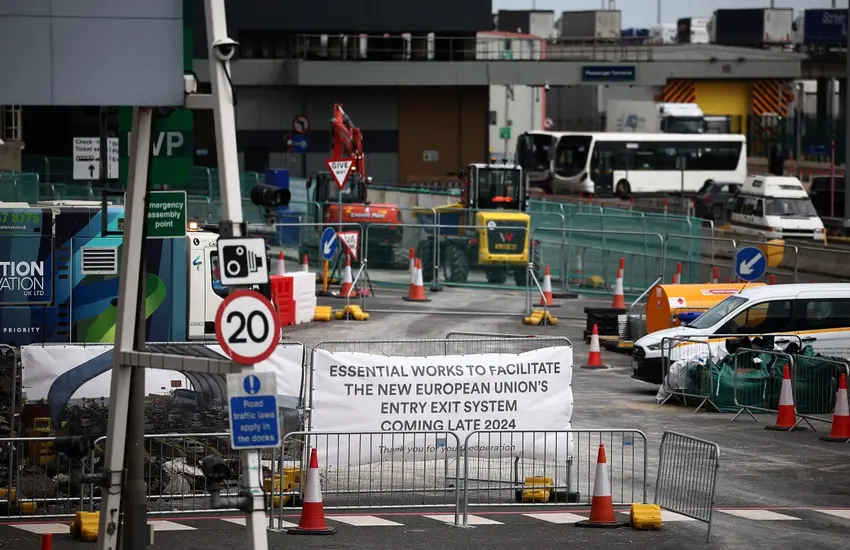
The EU's Entry/Exit System (EES) is an IT system that will digitally record entries and exits data of non-EU nationals travelling for short-stays to EU and Schengen area countries with the aim of improving security and track overstayers.
The system includes enhanced passport checks including biometric details such as fingerprints and facial scans.
After several delays, it was set to be launched on November 10th - but the Commission decided to delay it once again because “it had not yet received the required declarations of readiness from all member states”.
The Commission and EU ministers have therefore decided on a “progressive entry into operation” of EES, instead of a full launch across Europe. This required changing the current legislation as it did not allow such flexibility.
On Wednesday, the Commission proposed a regulation that will give countries six months to deploy the system in full. However the exact start for the phased roll out was not given.
In practice, the Commission said in a note, “all member states will start operating the EES from day one at one or more border crossing points” registering at least 10 percent of estimated border crossings. The proportion will have to increase to 50 percent within 90 days.
"In the first 60 days, registration will be allowed without taking biometric data (fingerprints and facial scans). By the end of the six month period countries will have to ensure the full registration of all third country nationals".
The regulation allows the member states which are ready to operate EES fully from day one.
It also includes the possibility to temporarily suspend the system in case of technical failures or other disruption at the borders.
One of the big concerns about the system had been queues at the UK-France border as some crossing points, especially the Port of Dover, already struggle to cope with post-Brexit security checks and have reported long queues at peak travel times.
EES: Why is the UK-France border such a problem?
Although the system was designed to replace the manual passport stamping, this will remain mandatory until the end of the six-month period “for all individuals falling in the scope of the EES”.
EU citizens and residents of EU and Schengen countries, including Norway and Switzerland are exempt from EES registration. However they may get caught up in queues and delays once the system is rolled out.
In detail: Who is exempt from EES passport checks
New Internal Affairs Commissioner Magnus Brunner said: “The Entry-Exit system is a big step towards more integrated and comprehensive border management. Allowing Member States to gradually phase in the new system will ensure it operates smoothly from day one.”
The proposal now has to be approved by the European Parliament and Council. The EES is on the agenda of EU Home Affairs minister meeting on December 12th.
Once the proposal is adopted and enters into force (four days after publication in the Official Journal), member states will have 60 days to elaborate with the EU agency in charge of the system (eu-LISA) their rollout plans. The Commission will then decide on the date of the start, after having received all declarations of readiness.
Six months after the launch of the EES, the EU was planning to introduce the European Travel Information and Authorisation System (ETIAS), with a request for non-EU nationals visiting the Schengen area for short stays to register and pay €7 before travelling.
“A revised planning of ETIAS will be discussed and agreed between the Commission, Member States and eu-LISA in the light of the expected entry into operations of the EES,” the Commission said.
Comments